

Disclaimer: This guide is for educational purposes only. It is not financial advice.
Do your own research. If possible, consult a licensed financial professional before making investment, savings, or debt-related decisions.
The start of the year is the perfect time to take a clear look at your finances and perform a full personal finance audit.
An annual financial review helps you set realistic goals, adjust your investments, and make the most of your savings for the months ahead.
Why It’s Smart to Do a Financial Checkup Every January
January offers a fresh perspective both mentally and financially.
After the holiday rush and end-of-year bonuses, reviewing your finances now gives you the chance to start the year with a plan that supports your goals.
New Year, New Budget: The Best Time to Reassess Your Finances
- Leverage year-end bonuses and 13th month pay to support debt payoff planning, savings, or investment contributions.
Deciding how to allocate this money early on prevents impulsive spending and supports long-term financial stability.
- Reset after holiday spending: Identify areas where overspending occurred and adjust your budget to prevent a repeat this year.
Avoid Blind Spending and Investment Drift
- Realign your portfolio: Make sure your investments match your updated risk tolerance and financial goals.
- Cut loss-making investments early: Do not let underperforming assets drag down your overall returns. Review and adjust where necessary.
Step 1 – Review Your 2025 Financial Goals and Milestones
The start of the year is a chance to evaluate what worked last year and plan how to move forward.
Looking back at your finances helps you set realistic goals and make smarter decisions and financial goal tracking for 2026.
What Went Right (and What Didn’t)
Savings Targets
Did you reach your savings goals, or were there gaps?
Take a detailed look at your savings progress.
Did you hit your emergency fund target? Did you set aside enough for short-term goals like vacations or holiday spending?
Understanding where you succeeded or fell short helps you adjust your approach and avoid repeating mistakes.
Budgeting
Identify areas where you overspent or stayed on track.
A detailed budget review shows where your money actually went. Look closely at categories like dining out, subscriptions, or impulse purchases.
These insights help you create a more realistic and sustainable budget moving forward.
Net Worth
Did your overall financial position improve compared to last year?
Net worth is the total value of everything you own (your assets) minus everything you owe (your liabilities).
Assets include savings, investments, and valuable items. Liabilities include debts such as loans, credit card balances, or personal borrowings.
Compare your assets and liabilities from the start and end of 2025. Did your savings or investments grow? Did you reduce your debt?
Example:
At the start of 2025, your assets totaled Php 300,000 from savings and small investments, while your liabilities were Php 150,000 from a personal loan and credit card balance. Your net worth was Php 150,000.
By the end of 2025, your assets increased to Php 380,000 and your liabilities dropped to Php 100,000. Your net worth is now Php 280,000.
Tracking your net worth helps you see whether your financial position is improving over time.
It shows if your efforts to save more or pay down debt are working and helps you set more realistic goals for 2026.
Reassess Big Goals for 2026
The start of the year is the right time to review your major financial goals and check if they still match your current income, responsibilities, and lifestyle.
Some goals may need to be adjusted, delayed, or prioritized differently based on what you learned last year.
Major Expenses
Example: House down payment, business capital, or travel fund.
List the big expenses you are planning for in 2026.
For example, you may be saving for a house down payment, planning to start or grow a small business, or setting aside money for travel.
Estimate how much each goal will realistically cost and how much you can save each month. This helps you avoid overcommitting and reduces financial stress.
Prioritize Goals
Break your goals into short-term, medium-term, and long-term plans to stay focused and achievable.
Short-term goals are those you want to achieve within the next 12 months, such as building an emergency fund or saving for a family trip.
Medium-term goals may take two to five years, like saving for business capital or a car.
Long-term goals include major milestones like buying a home or preparing for retirement.
Prioritizing your goals makes it easier to allocate your income wisely and track your progress throughout the year.
Step 2 – Evaluate Your Savings Accounts
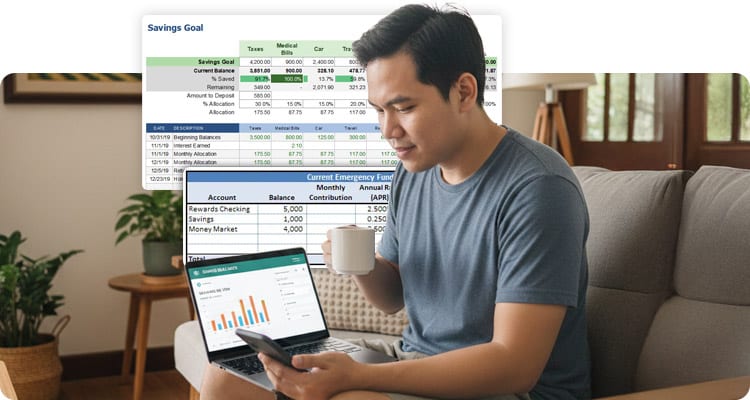
Savings are meant to support your short-term needs and protect you during emergencies.
At the start of the year, reviewing where your money is kept helps ensure your savings are accessible, earning interest, and aligned with their intended purpose.
This step strengthens your overall savings strategy evaluation.
Check Emergency Fund Health
Your emergency fund should cover three to six months of essential expenses such as food, rent, utilities, and transportation.
Review whether your fund still meets this level or if you need to top up.
If so, rebuilding it early in the year should be a priority as part of your overall financial health check.
Are You Parking Money Wisely?
Look at where your savings are currently kept. Some funds should remain liquid, while others can be placed in accounts that offer better returns.
If your money is sitting in low-interest accounts, consider alternatives such as high-interest digital banks or time deposits.
You may also choose to automate savings to maintain consistency. Making these adjustments helps ensure your money grows instead of losing value to inflation.
Step 3 – Audit Your Investments
Auditing your investments at the start of the year ensures your money is still aligned with your goals.
This step helps you review performance, manage risk, and decide if any adjustments are needed as part of your year-start investment check.
Here are the most common ones:
Stocks and Mutual Funds
Stocks and mutual funds often make up the core of an investment portfolio.
Reviewing them regularly supports better decision-making and reduces the risk of holding investments that no longer align with your goals.
PAGIBIG MP2
Another option is the PAGIBIG MP2.
PAGIBIG MP2 is a government‑backed, voluntary savings program that typically offers higher dividend rates than regular Pag‑IBIG savings.
It can be a reliable part of your investment mix for low‑risk, medium, and long‑term goals.
- Contribution limits: Minimum Php 500 per remittance; there is no official maximum, so you can contribute more based on your budget and goals.
- Dividend rate: Historically around 6–8% per year, compounded annually, and tax free.
- Liquidity and payout: MP2 savings are typically held for five years before maturity.
At the end of the five‑year term, you have the option to receive your total savings and dividends as a lump sum or have your dividends paid out annually.
Example:
If you contribute Php 5,000 per month to MP2 for one year and earn an average 7% dividend over the course of the full five‑year term, your principal grows steadily and your dividends compound annually.
At the five‑year maturity, you can choose how to receive your earnings.
PAGIBIG MP2 is a simple way to diversify your portfolio with a safe, government‑backed savings option that rewards longer‑term commitment with stable dividends.
Review Gains and Losses Against Your Risk Tolerance
Start by reviewing how your stocks and mutual funds performed over the past year. Look at both gains and losses, not just overall returns.
Observe how you reacted during market ups and downs.
Did you feel calm and stick to your plan, or did price drops stress you out or compel you to sell?
Your emotional reaction is one of the clearest signs of whether an investment matches your risk tolerance.
Example:
If a stock gained strongly during the year but dropped sharply several times along the way, consider how you felt during those drops.
If you found yourself constantly checking prices or worrying about losses, the investment may carry more risk than you are comfortable with, even if it ended the year positive.
Even a well-performing investment might not be worth it if it caused ongoing stress; it may no longer be the right fit for you.
This review ensures your portfolio still fits your risk tolerance and long-term goals.
Rebalance or Top Up?
After reviewing performance, decide whether adjustments are needed.
Rebalancing means reducing exposure to assets that now make up too much of your portfolio and increasing those that align better with your goals.
This keeps your portfolio balanced and supports effective investment portfolio rebalancing.
Topping up may make sense if you believe in the long-term potential of certain investments and they still fit your strategy.
However, avoid reacting emotionally to short-term market movements. Focus on disciplined decisions that support your overall financial plan.
Real Estate and Insurance
Check whether your real estate and insurance holdings are helping you grow wealth or becoming financial burdens.
- Are they assets or liabilities?
Evaluate your properties and insurance policies. For example, rental properties should ideally generate income or appreciate over time.
If expenses like maintenance, taxes, or fees consistently outweigh the benefits, the property may be draining resources instead of building wealth.
- Policy review and updates
Review your insurance policies to make sure coverage is appropriate for your current needs. Adequate coverage generally means:
Life insurance: A death benefit that can cover 5–10 years of your family’s living expenses.
For example, if your family needs Php 20,000 per month to cover bills, groceries, and education, an adequate policy would provide Php 1.2–2.4 million.
Health insurance: Limits and benefits should cover major medical costs, such as hospitalization or surgeries.
For instance, a policy with a Php 500,000–1,000,000 annual coverage can protect against most emergencies.
Property insurance: Coverage should match the replacement cost of your home, car, or other assets.
For example, a house valued at Php 3 million should have coverage close to that amount.
Premiums: Costs should be reasonable and fit your monthly budget, typically no more than 10–15% of your monthly income.
Beneficiaries: Make sure names are current and reflect your intended recipients.
Adjust policies as life circumstances change, such as getting married, having children, or buying property.
Crypto, Side Hustles, and Alternative Investments
Speculative investments and side income streams can be exciting, but they require careful monitoring.
- Review performance
Track returns from crypto holdings, small businesses, or other alternative investments.
Ask yourself whether these assets are meeting your expectations and contributing to your overall portfolio.
- Set allocation caps
Decide how much of your total investments or income should be in higher-risk or experimental assets, such as crypto, small business ventures, or speculative stocks.
A common benchmark is 5–10% of your total investment portfolio for high-risk assets.
Example: if your total investments are Php 500,000, you might allocate Php 25,000–50,000 to speculative investments.
For remote work or side hustles, avoid relying on them for essential expenses until the income becomes stable and predictable.
For example, if you land virtual assistant jobs, avoid depending on the income for essential expenses right away.
Use the first few months of earnings for savings or debt payments until the income becomes stable and predictable.
Setting clear limits helps protect your financial health, keeps your portfolio balanced, and allows you to pursue higher-risk opportunities while still focusing on steady, long-term growth.

Step 4 – Check Your Debt Health
Managing debt is a critical part of your financial health.
At the start of the year, an annual financial review of all liabilities ensures that repayments are manageable, interest costs are under control, and your debt does not derail your other financial goals.
Credit Card Balances
Check your credit card balances, interest rates, and minimum payments.
- Interest rates: Identify which cards carry the highest interest. If you still had a balance at the end of 2025, prioritize paying down high-interest cards first. This can save you a significant amount over time.
- Payment plans: Review whether your current repayment strategy is realistic. Can you pay more than the minimum each month to reduce debt faster?
Ideally, pay more than the minimum due—enough to reduce the principal meaningfully. Paying only the minimum keeps you in debt longer and increases the total interest paid.
- Refinancing or balance transfers: If interest rates are very high, explore options to transfer balances to a lower-rate card or consolidate debt into a personal loan with better terms.
Keeping credit card debt under control prevents small balances from growing into large financial burdens.
Loans and “Buy Now, Pay Later” Trackers
Review all other loans, including home loans, car loans, business loans, or BNPL purchases.
Repayment Capacity
Check if monthly payments fit comfortably within your income. A common benchmark is that total debt payments should not exceed 30–35% of your monthly income.
Example:
- Monthly income: Php 50,000
- Total debt payments (home loan, car loan, BNPL installments): Php 15,000
- Debt-to-income ratio: 30% – manageable and within the recommended range
If your payments exceed this percentage, you may need to adjust your strategy to avoid financial stress.
Loan Terms
Review interest rates, repayment schedules, and total cost. For example:
- Home loan: Php 2,000,000 at 6% annual interest over 20 years → monthly payment ~Php 14,300
- Car loan: Php 500,000 at 8% annual interest over 5 years → monthly payment ~Php 10,200
Understanding the total cost of the loan helps you prioritize repayments and avoid surprises.
Adjustments
If debt is straining your cash flow, consider options such as:
- Refinancing: Move to a lower interest rate to reduce monthly payments.
- Consolidating loans: Combine smaller loans into one with a more manageable payment schedule.
- Reprioritizing payments: Focus on high-interest or overdue loans first while keeping other accounts current.
Regularly tracking loans and BNPL commitments helps prevent late fees, reduces financial stress, and ensures you stay on track with your broader financial goal tracking.
Step 5 – Update Your Financial Tools and Habits
At the start of the year, updating your tools and habits helps you stay on top of your finances.
Using the right apps, tracking methods, and regular check-ins makes budgeting, saving, and investing much easier.
Use a Budgeting App or Spreadsheet
Organize your income, expenses, and savings with a tool that works for you. Some popular options for Filipinos include:
- GCash/Maya: these apps lets you track spending, save automatically, and invest in low-risk or high-interest options all in one app.
- Moneygment: Track expenses and monitor savings goals.
- Notion templates or spreadsheets: Customize your own budgeting and investment tracker.
Choosing a consistent method helps you maintain a financial planning checklist and monitor savings progress evaluation throughout the year.
Schedule a Quarterly Money Check
Set aside time to review your finances regularly. Add specific dates in your calendar for Q1, Q2, Q3, and Q4 to check your:
- Savings progress
- Debt repayments
- Investment performance
- Budget adherence
Regular reviews make it easier to spot issues early and adjust your strategy before problems grow.
Talk to a Financial Planner (Optional but Ideal)
Consulting a registered financial planner (RFP PH) can provide professional guidance if you have complex investments, large debts, or long-term goals such as home ownership or retirement.
A planner can help with:
- Investment strategy updates
- Retirement account assessment
- Debt repayment planning
- Overall financial health check
Even a single session can help you make informed decisions and keep your money aligned with your goals.

FAQs – Investment and Savings Review in the Philippines
An annual financial review of your investments and savings can feel overwhelming with multiple goals or accounts.
These FAQs offer practical tips to help you stay on track and make smarter financial decisions.
What’s the best way to track multiple savings goals?
Use a budgeting app or spreadsheet that allows you to categorize your goals.
For example, you can have separate categories for emergency funds, travel, business capital, and short-term investments.
Apps like GCash and Maya let you save and invest for multiple goals automatically. Regularly reviewing your progress ensures you stay on track.
How do I know if I should sell or hold an investment?
Consider your risk tolerance, time horizon, and financial goals. If an investment is underperforming but still fits your long-term plan, it may be better to hold.
If it causes stress or no longer aligns with your goals, selling or rebalancing might be the right choice.
Regular portfolio reviews at the start of the year help you make informed decisions.
Should I stop investing during inflation?
Not necessarily. Inflation affects purchasing power, but continuing to invest, especially in assets that can outpace inflation, can help protect your wealth.
Focus on maintaining a balanced portfolio and reviewing your allocation to reduce risk.
How often should I check my financial health?
A good benchmark is quarterly. Schedule checks for Q1, Q2, Q3, and Q4 to review your savings, investments, debt, and budget.
Annual and quarterly reviews help you adjust before small issues become bigger problems.
Is it okay to have multiple investment platforms?
Yes, but make sure you can manage them efficiently.
Using multiple platforms can help diversify your investments, but avoid spreading yourself too thin.
Keep clear records of each account, monitor performance, and review allocations regularly to ensure your portfolio remains balanced.
Example:
You might have Php 50,000 total to invest.
You could put Php 30,000 in a mutual fund platform, Php 20,000 in a digital investment app like Maya/GCash, and Php 20,000 in a PAGIBIG MP2.
Tracking each account ensures you know where your money is, how it’s performing, and that your overall portfolio matches your goals.
Conclusion – Start Strong by Reviewing Smart
January 1 is the perfect time to review your year-end finances and plan for the next.
Checking your savings, investments, and debt helps you see what worked last year and what needs adjustment.
An annual financial review lets you:
- Track progress on savings and emergency funds
- Make sure investments match your risk tolerance and goals
- Manage debt to reduce interest and stress
- Plan contributions to PAGIBIG MP2 or other investment options
- Keep your budget realistic and actionable
For Filipinos looking to increase income, flexible online roles can support these financial goals.
Opportunities for job positions such as virtual office manager, online scheduling specialist, digital executive assistant, online personal assistant, and more allow you to earn from home while building savings, investing consistently, or paying down debt.
Register with Remote Staff today to start earning from home.